
Graphic Recording vs. Visual Notes vs. Sketchnotes: What's Actually the Difference?
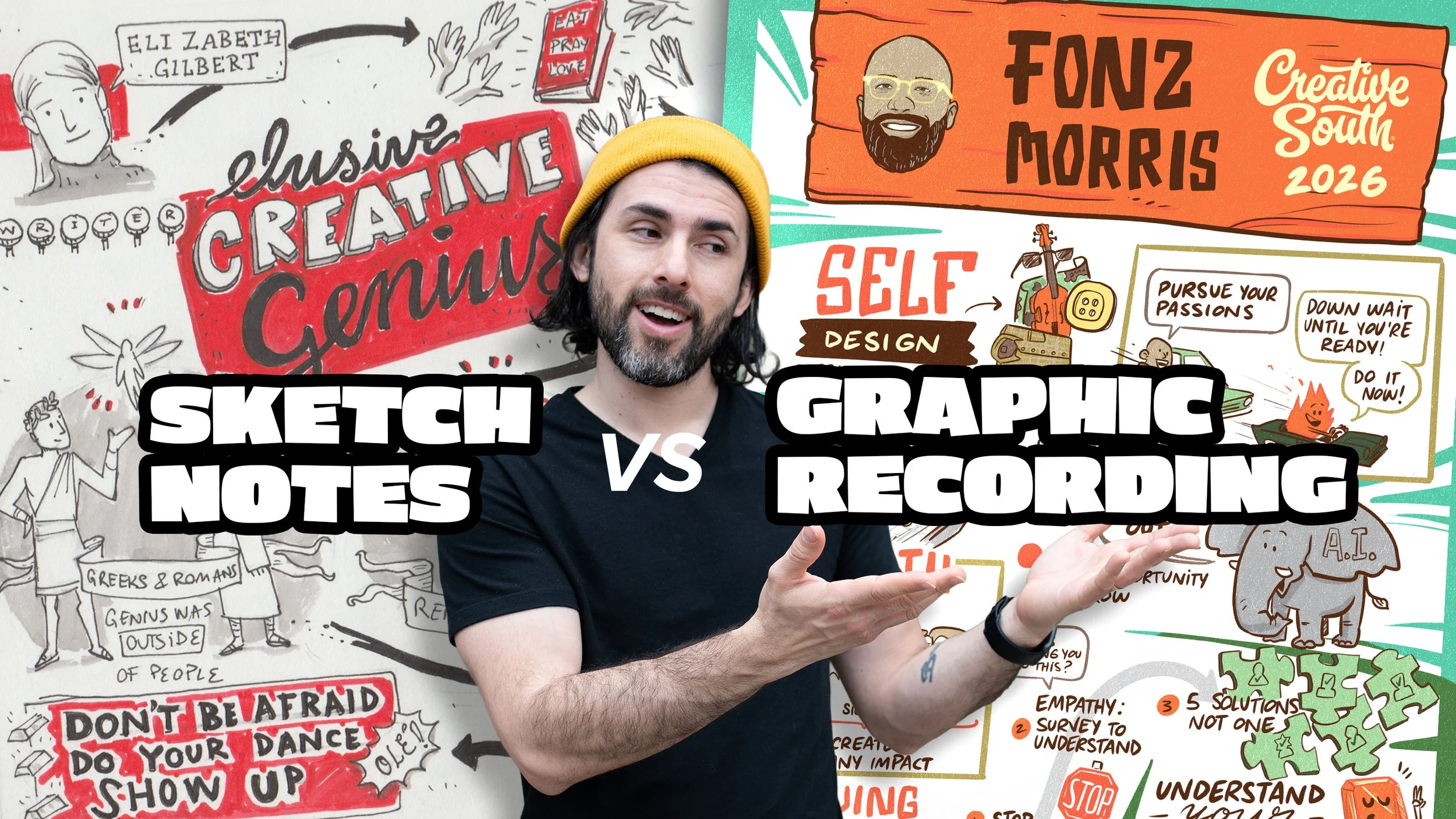
Graphic recording. Visual notes. Sketchnotes.
You’ve been searching for a person to draw at your event only to find out everyone uses a different name for this activity. Are they any different? And if so, which one should you hire? If you found yourself scratching your head a this, here’s the simple answer:
The umbrella term: visual communication
All three of these fall under one bigger category: visual communication. At its core, that just means making information easier to digest through visuals, metaphors, stories, and design tools like hierarchy, color, and layout. That's the shared foundation.
Where they differ is in purpose, audience, and how they're produced.
And thankfully, there are only 2 categories:
Sketchnotes: the personal, casual side
Sketchnotes are, as the name suggests, sketchy — rough, casual, and accessible to just about anyone. They're often used for personal reflection: journaling a trip, capturing notes from a book you're reading, or jotting down the one idea that stood out to you from a talk you attended.
There are no strict rules for a sketchnote. If it's for personal use, anything goes. You can capture just one idea from an hour-long talk and call it done. You can write a wall of text and a few icons and it’s all good. You can draw things that have nothing to do with the content and no one will judge you for that (fun fact: that’s how I started).
The goal of sketchnotes is self-expression and self reflection, not comprehensive communication, they are not typically a career path.
Sketchnotes are, in a sense, the gateway into this whole world of visual thinking. They're just not typically something you get paid for.
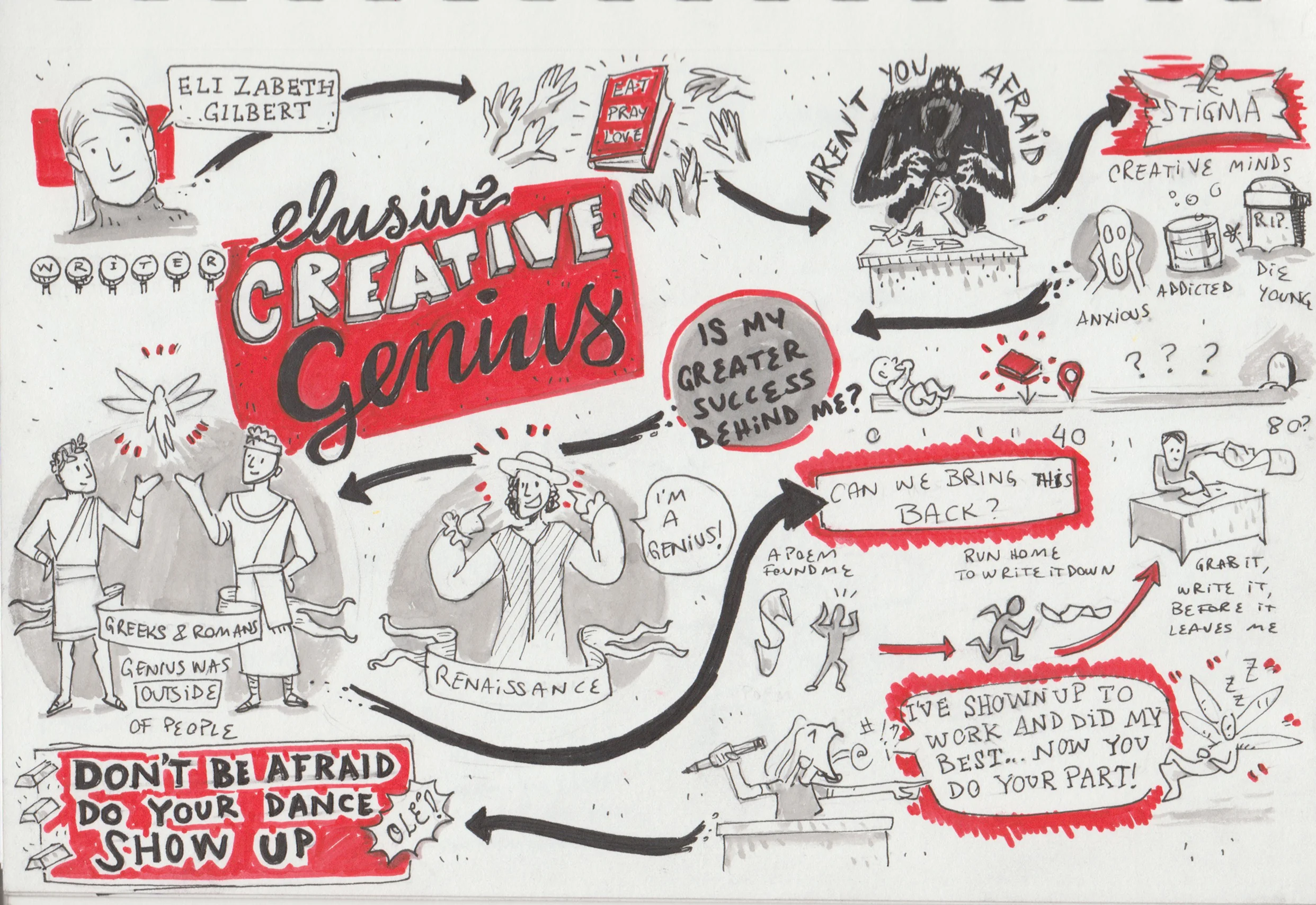
Personal Sketchnote by Alejo Porras created circa 2018, based on a talk by Elizabeth Gilbert titles Elusive Creative Genius. Made with pen and markers on a pocket sketchbook.
Graphic recording and visual notes: the professional side
Graphic recording and visual notes are, practically speaking, the same thing — the difference between them is mostly terminology.
Graphic recording is the original term, and it traces back to the world of consulting and visual facilitation, when consultants used whiteboards to help organizations align on strategy in real time. Over time, the field split into two roles: graphic facilitators, who interact with the group, ask questions, and guide people toward consensus, and graphic recorders, who listen actively and translate what's said into drawings in real time — without the same back-and-forth interaction.
Visual notes is the more modern term, and it's the one I personally prefer, because it's simpler: notes, that happen to be visual. "Graphic recording" can confuse people new to the field — some hear "graphic" and think graphic design, others hear "recording" and think video.
There are other terms used around the world. If you are in the UK and Europe, you’ll hear Live Illustration and Live Scribing used interchangeably.
All these terms term describe a professional service used at conferences, strategic meetings, podcasts, webinars, and corporate events — anywhere ideas need to be captured and made memorable in real time.
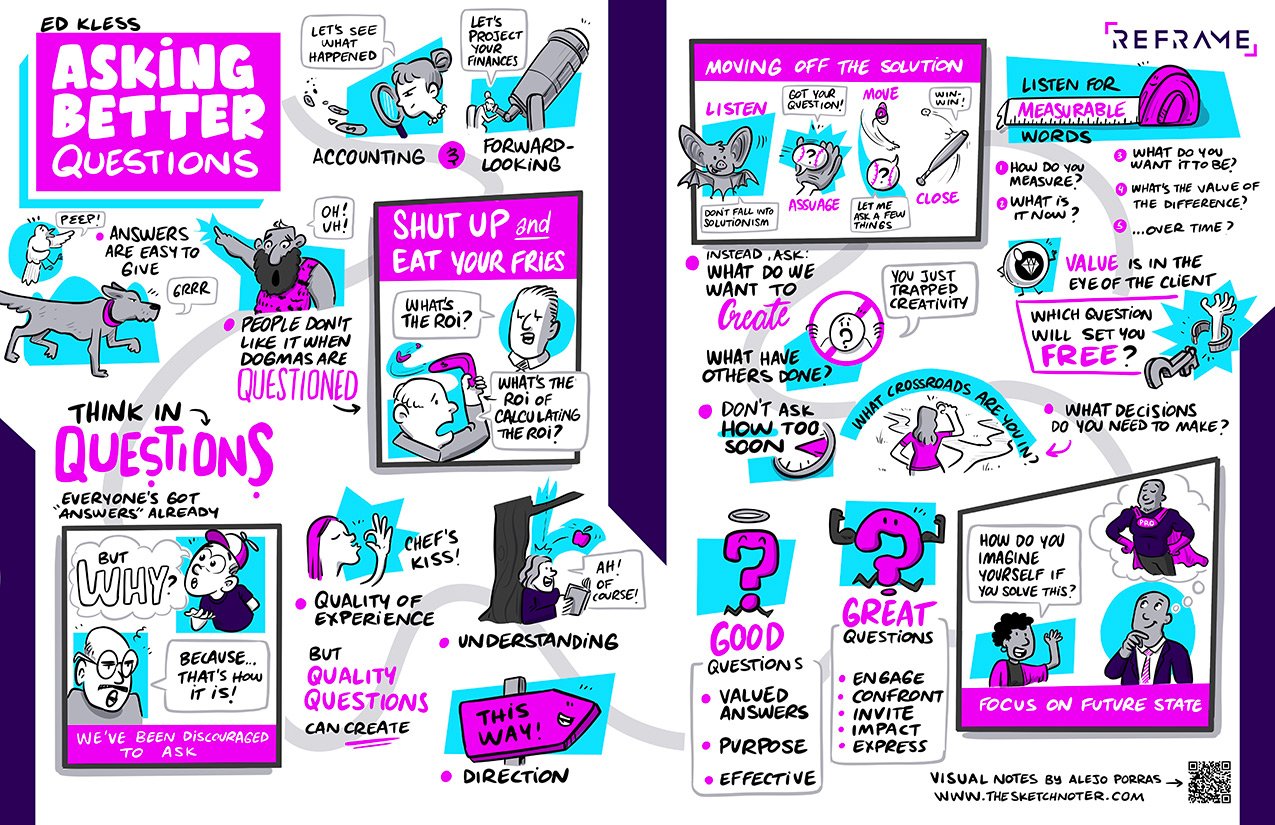
Visual notes made by Alejo Porras based on Ed Kless' keynote for REFRAMe accounting conference in 2024. Created digitally on iPad.
What actually separates a sketchnote from a professional visual note
The real distinction goes beyond the tools used, and it’s more about the intent and the audience.
A sketchnote captures what matters to you personally. If you sketch a talk, you might capture just one idea, and that's completely fine.
Professional visual notes and graphic recording exist to synthesize the main ideas for the audience who's actually going to look at them afterward. If a 60-minute talk had five great ideas, capturing just one wouldn't do the job — the purpose is retention and communication for everyone in the room, not personal expression for the person drawing.
The shift from "what stood out to me" to "what does the audience need to remember" is really the whole difference between a hobby and a professional service.
Why this matters if you're hiring for your event
If you're looking to hire a visual note taker or a graphic recorder for your conference, this distinction matters because it tells you what to expect. A professional isn't there to sketch their personal takeaways — they're there to translate your entire session into something your audience will remember, share, and act on.
And that's exactly why graphic recording and visual notes have become a niche professional service in high demand, typically associated with quality design, clever and well crafted drawings, and accurate lettering — while sketchnotes stay a wonderful, low-stakes personal practice that every person can practice no matter if they’ve never drawn a day in their lives.
Looking to bring a professional visual note taker to your next event?
Contact us and let's talk about what your audience needs to remember.