

Visual note taker for conferences and events
Your sessions, captured as they happen and handed back as something you can actually use.
Not a transcript nobody opens — visual notes your attendees photograph, your marketing team reuses, and your speakers share.
How it's different from a note taker
Why visual, instead of written notes
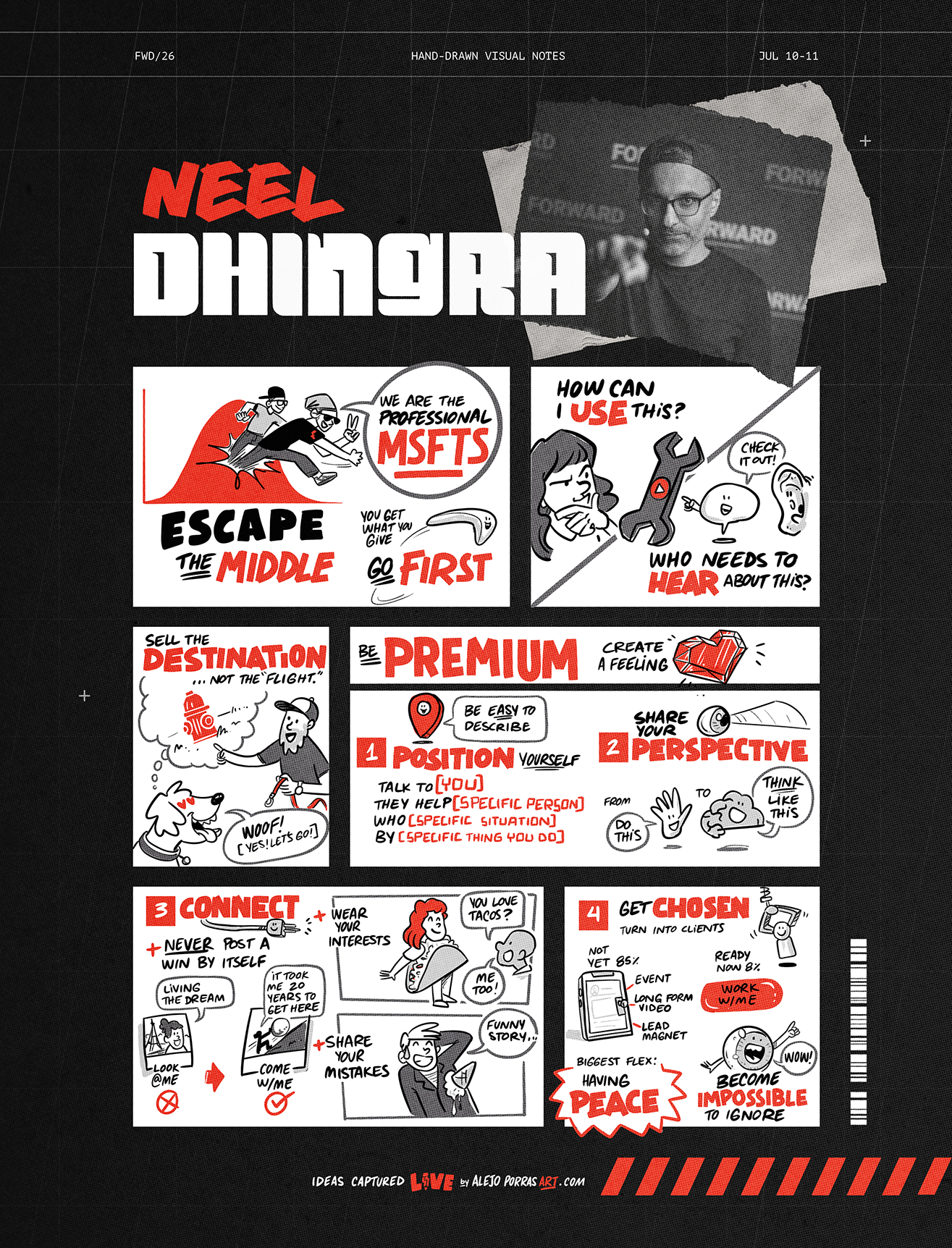
A written summary is a record. It gets filed. Visual notes are a record that people choose to look at, and that difference shows up in three places.
In the room. The board becomes the thing people gather around at the coffee break. It gives attendees somewhere to stand and something to talk about, which is most of what networking actually needs.
On the day. People photograph it. Your event hashtag ends up attached to an image rather than a wall of text, and that's the difference between a post that gets scrolled past and one that doesn't.
Afterwards. Your marketing team has twelve months of content instead of a PDF. Each session becomes a post. Each quote becomes a graphic. It's already made.
The underlying point: your speakers said something worth hearing. Visual notes are how that survives contact with everyone's inbox.
Formats
Digital or with markers.
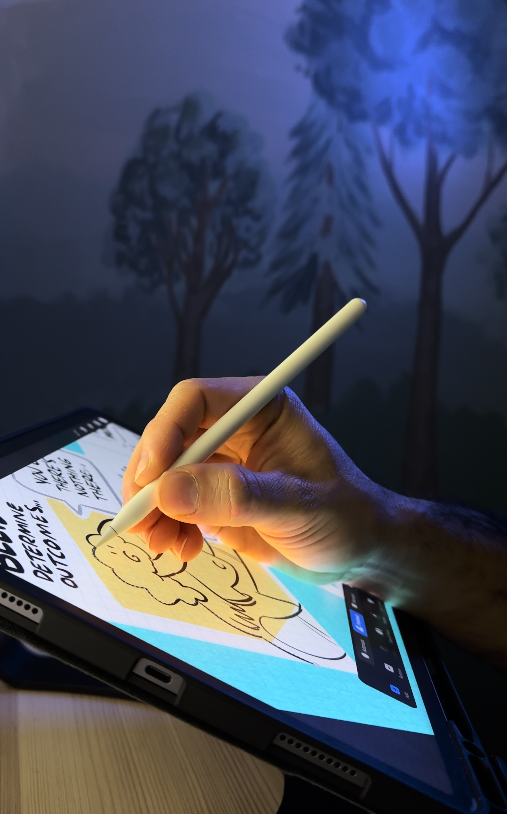
Digital
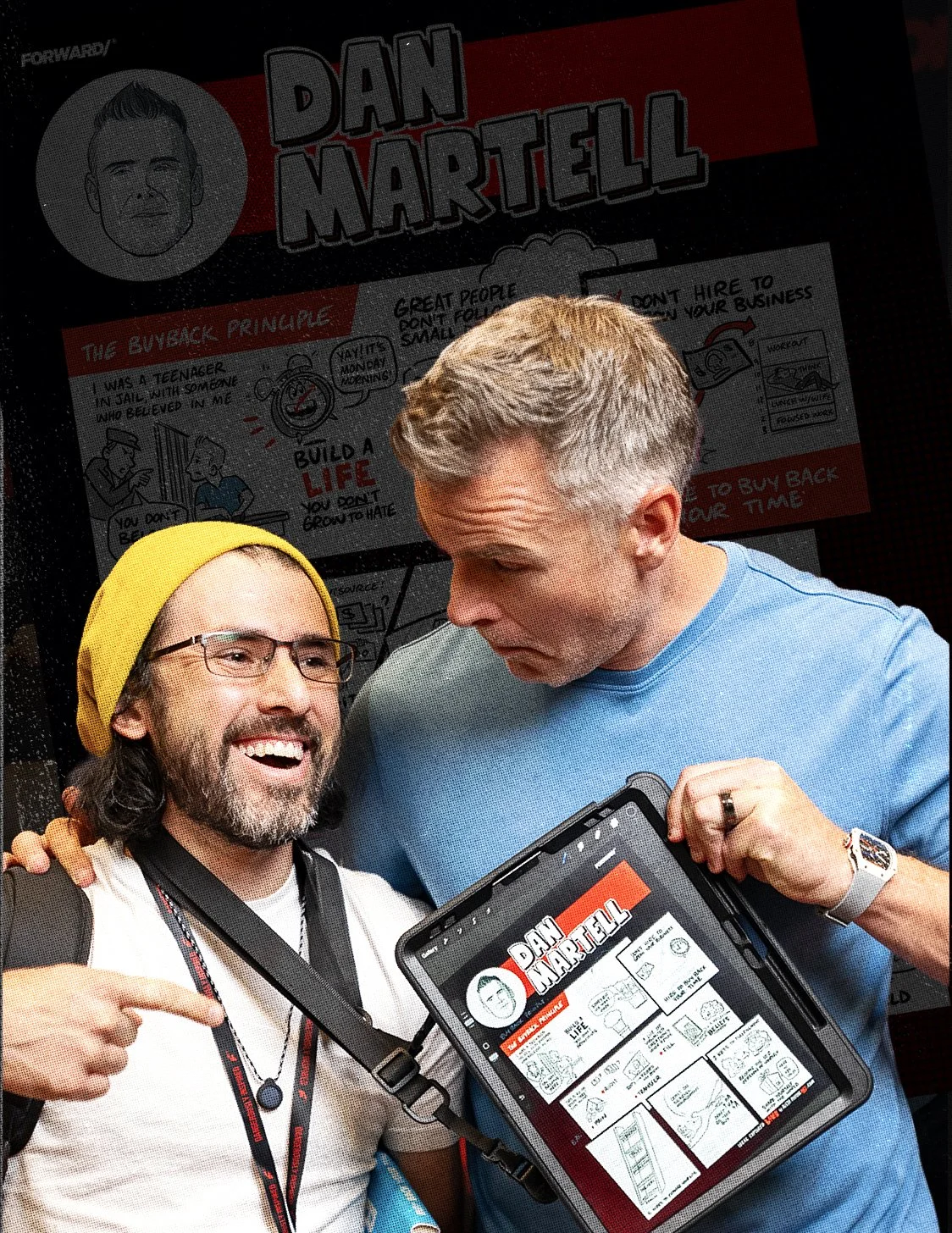
Drawn on an iPad and projected live, so the whole room watches the notes build in real time. Easiest logistics — no wall space needed, no shipping, files ready the same day.
This is usually right for packed conference schedules and for anything with parallel tracks.

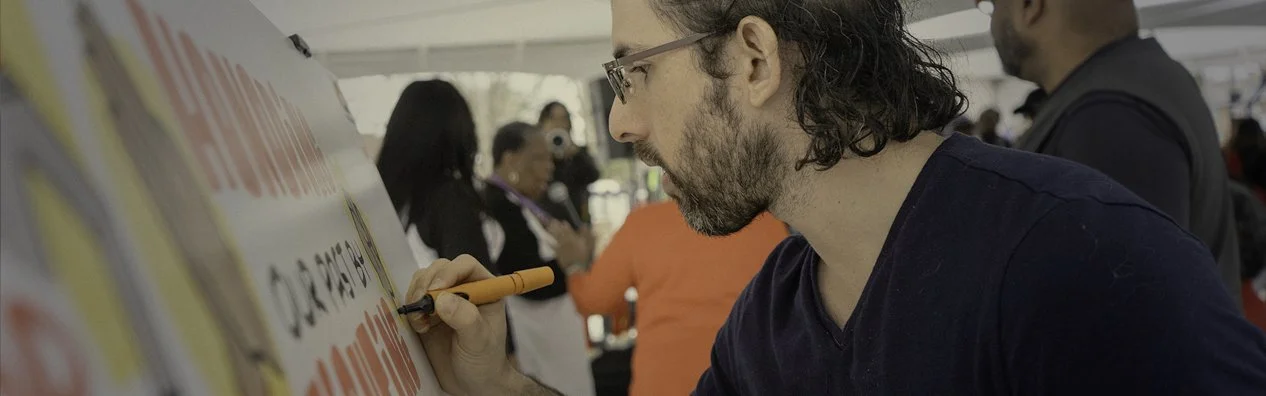
with markers
Large boards drawn with markers. From 40x60 inches to bigger walls. These have a physical presence that a screen doesn't, and they turn into a gathering point during breaks.
Needs wall space and sightlines, which is a quick conversation beforehand or a site visit if you'd rather.
Either way the deliverable files are the same. The choice is about what you want happening in the room, not about what you get afterwards.
Bilingual
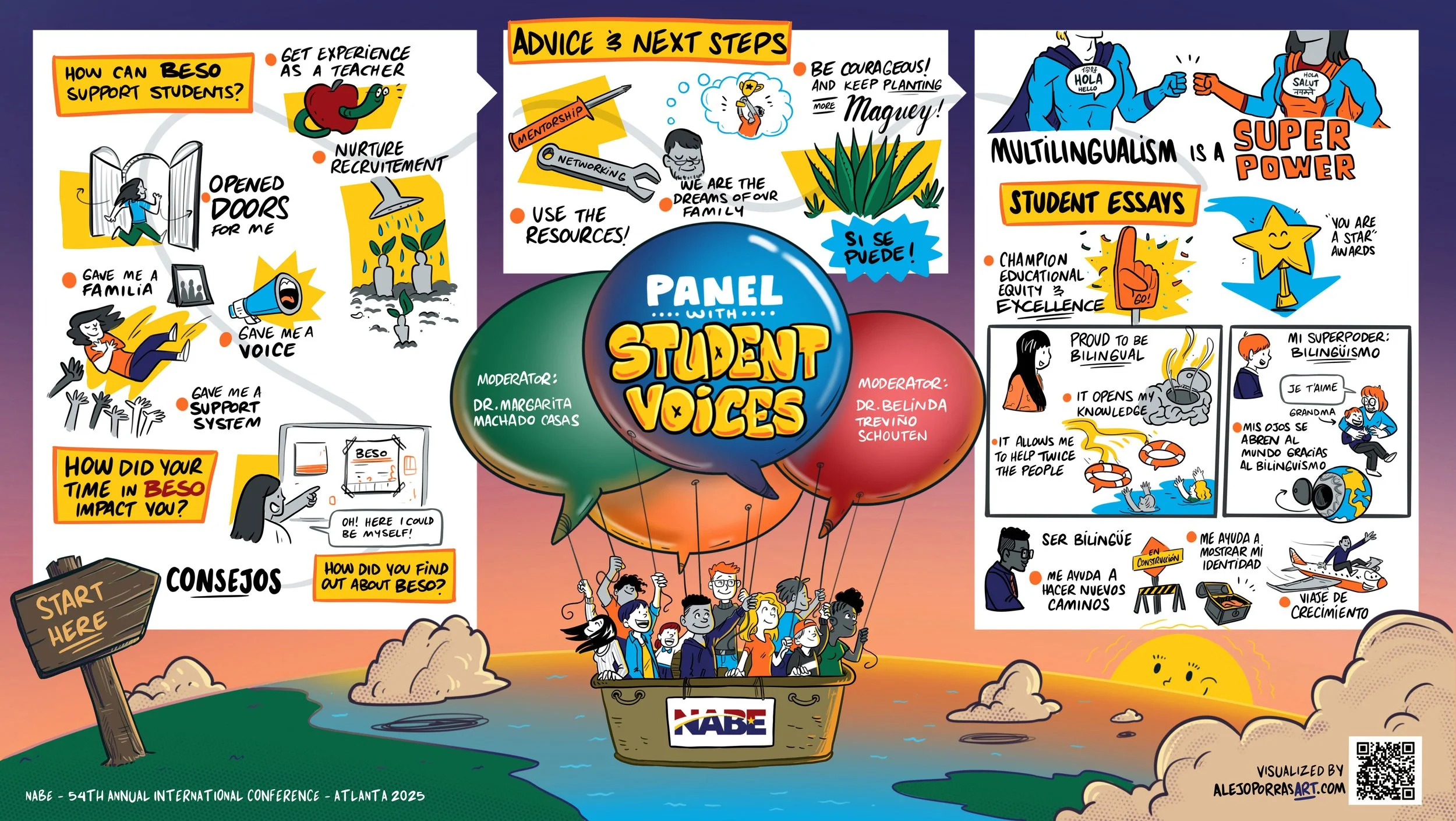
Visual note taking in English and Spanish.
I was born and raised in Costa Rica and I'm fully bilingual. If your sessions run in Spanish, or switch between languages, the notes follow whichever language the speaker is using — and you can have the same board delivered with text in either.
For organizations with teams across Latin America, this is usually the detail nobody expected and everybody mentions afterwards.
There are very few visual note takers anywhere who work in both languages. If that's relevant to your event, it's worth a conversation.
What you actually walk away with
What you receive
Most event content dies the week after the event. Visual notes don't, because they're the one asset people want to look at again. Here's what lands in your hands:
High-resolution files for every session captured, cleaned up and colour-corrected.
Print quality, so they work on a poster as well as a post.
Web-optimised versions sized for LinkedIn, Instagram and your event recap page — so your team isn't resizing anything.
The original boards, if we worked on paper. They ship to you, or they stay on the wall at your office. People do frame these.
Individual crops of each section, which is what makes the notes usable as a content series rather than one big image nobody can read on a phone.
Timing: 12 hours for anything drawn digitally. Two to five working days for the full cleaned-up set after a multi-session conference.
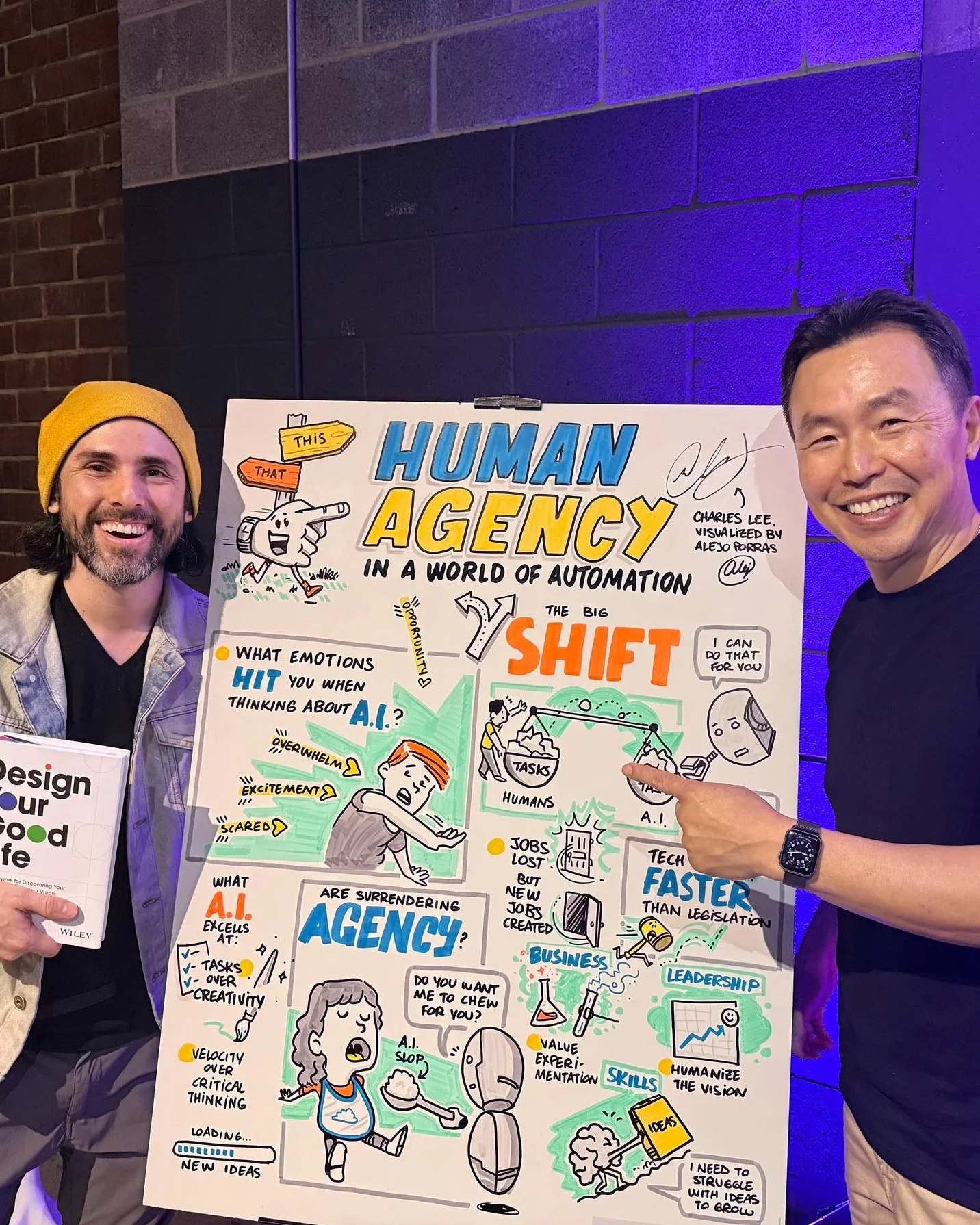
Live event graphic recording
On-site at conferences, summits and board meetings worldwide. Big paper boards, or drawn digitally and projected on screen. Every session captured as it happens.
Virtual and hybrid events
Drawn digitally and broadcast live for webinars, town halls and hybrid conferences. Works whether your team is in Buckhead or spread across three time zones.
Pricing ranges
Investment
Flat fees that cover everything but lodging. Travel is included for events booked two months or more in advance.
Local* sessions, remote work, and smaller projects start at $2,000.
A full conference partnership with experience design — pre-event visuals, live capture across multiple rooms, on-stage storytelling and a post-event content pack — can run up to $50,000.
Most events land somewhere in between. Tell me what you're planning and I'll tell you where you'd fall.
*Definition of Local: Alejo is based in Atlanta, with trusted partners in Los Angeles, Chicago, New York, Paris, Amsterdam, Berlin, Santiago and London. If your event is in those cities and you don’t mind we send you one of our trusted partners, you’ll get the local rate.
Bilingual services
In English y en Español
I was born and raised in Costa Rica and I'm fully bilingual. If your Atlanta event runs in Spanish, or switches between both languages, I can draw in whichever language the speaker is using — and I can hand you the same board with text in either.
For companies with teams across Latin America, this tends to be the detail nobody expects and everybody appreciates.
How it works
Even though my SEO is going to hurt a bit, I’d rather show you how it works rather than writing it. Check out the video below to see the process.
How many sessions can you cover in a day?
Ideally four to six substantial sessions, depending on length and how much runs back to
back. But I've covered two-day events with 14 sessions totall. It's insane, but it's doable.
For a conference with parallel tracks I'll bring in collaborators — people I've worked with
and in many cases trained myself.
Do you need the slides or script in advance?
It helps but isn't required. A run of show, speaker names and the rough shape of each talk is
plenty. I draw from what's actually said, not from the deck.
What if a speaker goes off-script or runs over?
That's normal and it's fine. Drawing live means following the room, not the agenda. If a session
takes a turn, the notes take it too.
Can we use the notes in our marketing afterwards?
Yes — that's what they're for. You get full usage rights for your own marketing, recaps and
internal use. I'll ask to share the work in my own portfolio, and if any of it is sensitive we
agree that upfront.
How far in advance should we book?
Three to six months is ideal for a conference — it gives us time to design the visual approach
around your programme rather than bolting it on.
I've done good work with three weeks' notice for smaller events. When in doubt, ask.
Can you work remotely?
Yes. For webinars, town halls and hybrid events I draw digitally and the notes broadcast live to whoever's watching, wherever they are.
Planning a conference?
Tell me what you're working on. Fifteen minutes on a call and you'll know whether visual notes are right for your event — and if they aren't, I'll say so.